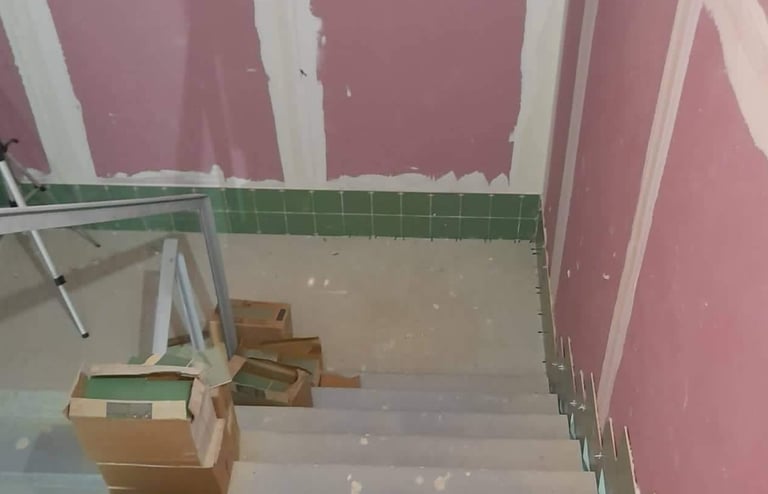
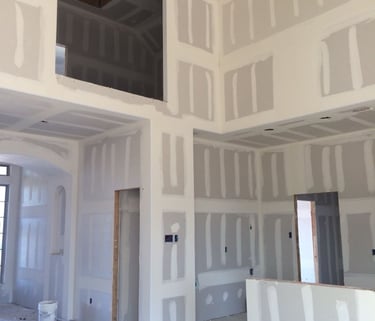
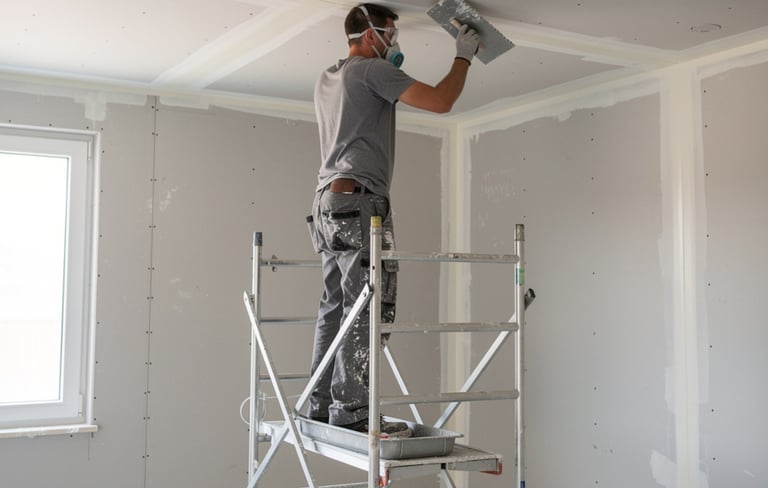
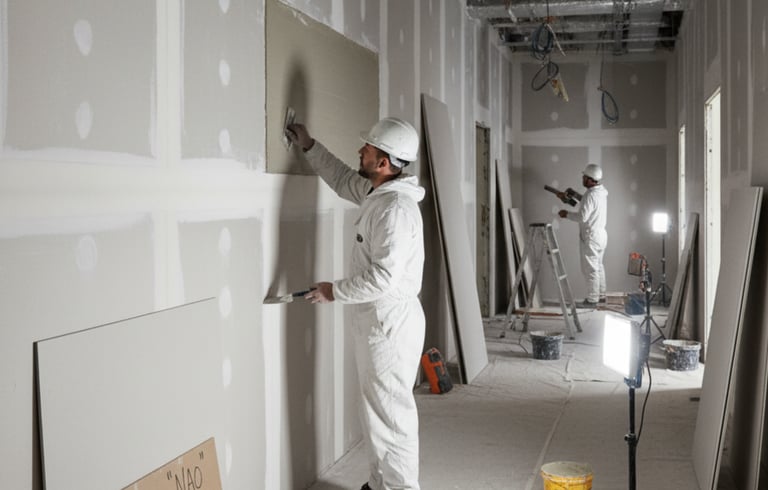
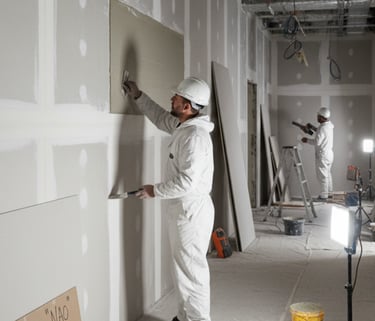
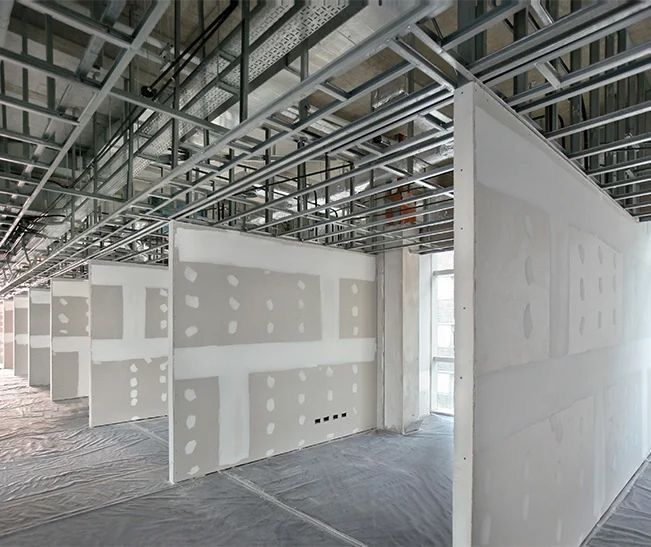
Taping and jointing are fundamental steps in finishing walls and ceilings lined with plasterboard. Both activities involve sealing the gaps between the boards after they have been fixed to the frame. This stage is crucial for ensuring the walls are smooth, robust, and ready for the final finish, such as paint or wallpaper.
1. Preparation (Pre-Jointing)
Before starting the taping process, it is essential that the plasterboard is securely fixed to the structure and that all socket boxes, switches, and internal corners are protected. Joint compound (the "mud") is a fine-grade material that can penetrate electrical components, hardening over time and causing installation or maintenance issues.
2. The Taping Process
The application of joint tape is the first step of the union. The tape distributes mechanical stress across the joint, preventing it from cracking or shifting over time.
Paper Tape: The most common type. It often has a slight crease in the centre for corners. One side is pressed against a thin layer of compound, and the smooth side faces out to receive the next coat.
Scrim Tape (Glass Fibre Mesh): This is a self-adhesive mesh made of glass fibre. It is extremely strong and does not stretch. While slightly more expensive, it is easier to apply as it sticks directly to the board before the compound is added.
Application Steps:
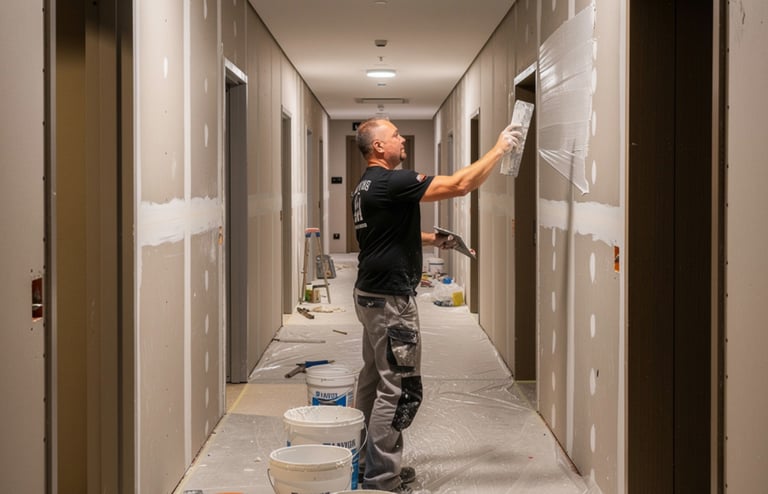
Apply a light, even layer of compound over the joint.
Bed the tape into the compound.
Press firmly with a jointing knife to remove excess compound and air bubbles, ensuring the tape is fully bonded to the board
3. The Jointing Process (Layering)
Once the tape is fixed, the jointing layers are applied to cover the tape and level the surface. Professional results usually require two or three "passes" (coats).
First Pass (After Taping): A medium-thickness layer is applied over the tape.
Drying Time: Essential. Drying can take 24 to 48 hours, depending on humidity and temperature.
Sanding: Use fine-grit sandpaper (100-120) on a sanding block to level ridges and remove imperfections.
Subsequent Coats: Apply new layers of compound over the sanded surface. Due to shrinkage, the edges (feathers) of the joint receive more material to blend into the board.
Final Coat: A finishing application that is sanded until perfectly smooth and flush with the rest of the wall.
4. Types of Joints and Corners
From a finishing perspective, different types of joints require specific techniques:
Butt Joints: Joints where the non-tapered ends of two boards meet. These require more "feathering" (spreading the compound wider) to hide the hump.
Internal Corners: Where walls meet. These are reinforced with paper tape folded down the centre or specialised corner tape.
External Corners: These are typically reinforced with metal or plastic corner beads (beading) to provide impact resistance and a crisp, straight edge.
Common Mistakes to Avoid
Proud Screws: Screws that aren't driven slightly below the surface leave bumps.
Excess Compound: Increases drying time and requires excessive, messy sanding.
Visible Edges: Failing to "feather out" the edges leads to visible lines after painting.
Painting without Primer: Compound absorbs paint differently than the board, causing "flashing" (patchy spots). Use a drywall sealer or primer first.
Sanding without Protection: Joint dust is hazardous. Always wear a dust mask and eye protection.
Professional Tips for a Top Finish
Thin coats are better: Thick layers tend to crack or bubble. Three thin coats are always superior to one thick one.
Wait for full drying: Never skip stages or apply a new coat over damp compound.
Sand with care: Avoid sanding through the tape or the paper face of the plasterboard. If this happens, re-apply a thin layer of compound.
Keep tools clean: Clean your knives and hawks after every use to prevent dried crumbs from ruining the smooth finish.
Taping and Jointing is a craft. Achieving perfectly seamless walls requires practice to master compound consistency, drying times, and sanding techniques. A poor finish is the most common cause of "ghosting" (visible joint lines) or cracking over time.
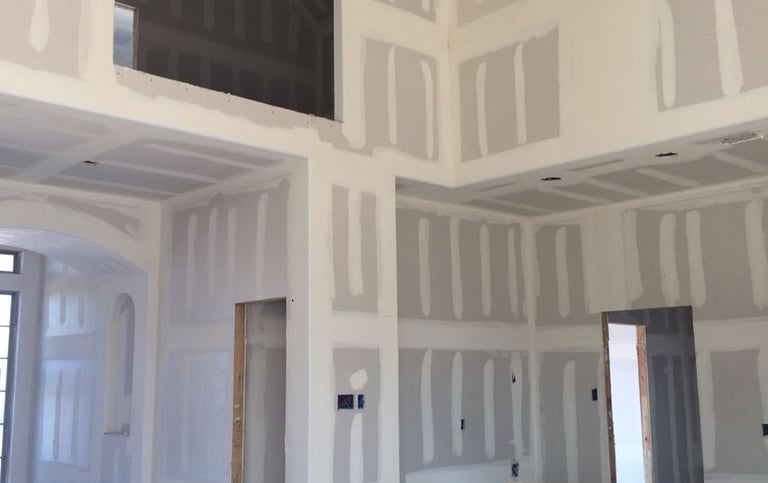
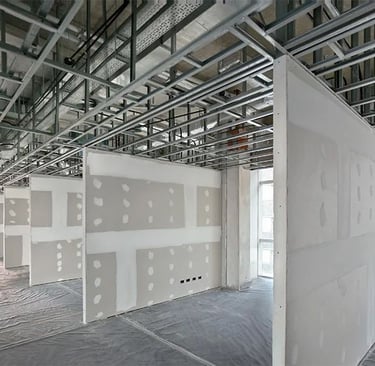
Providing Premium Taping Jointing